
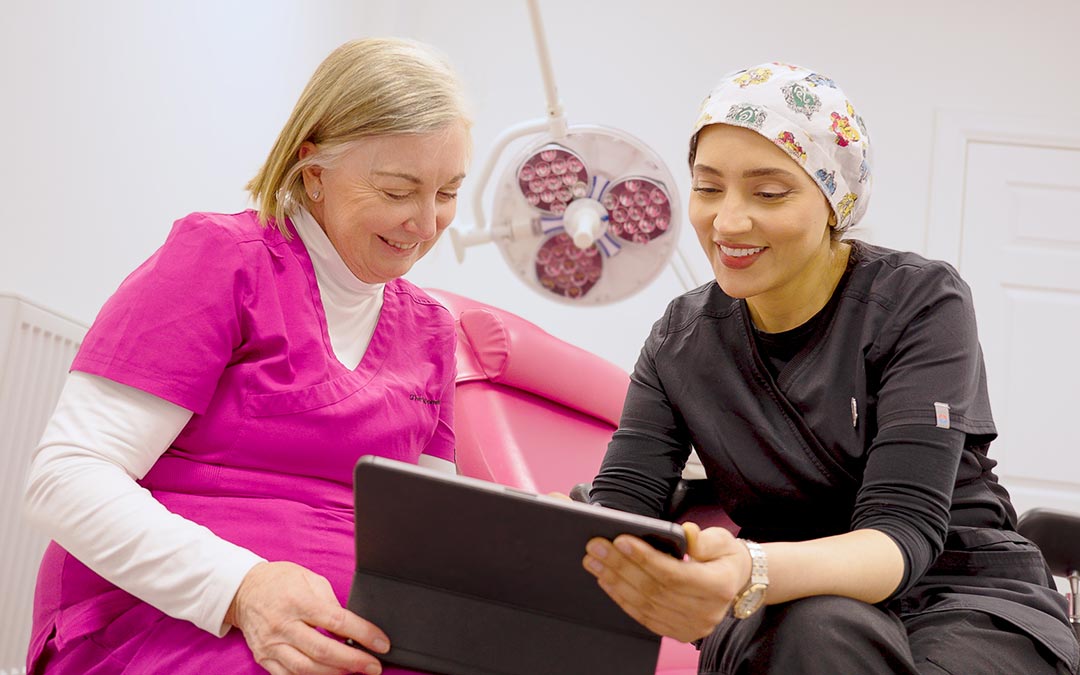
From speaking with hundreds of women every year who come to The Women’s Clinic in Glasgow for a labiaplasty procedure, it might come as a surprise to hear the majority are not seeking an aesthetic enhancement. Rather they’re looking for relief from persistent physical discomfort that interferes with exercise, intimacy, clothing, hygiene, and day-to-day wellbeing and which crushes body confidence.
What is Labiaplasty?
Labiaplasty surgery reduces or reshapes the labia minora (inner lips). A day case procedure performed with local anaesthetic, it’s an increasingly popular intimate surgery sought by women. Patients can opt for incisional (scalpel cutting) or laser surgery; at The Women’s Clinic we specialise in precision and minimally-invasive laser surgery using the advanced CO2RE Intima fractional laser.
What intimate physical symptoms are women presenting with?
During initial consultations here at The Women’s Clinic these are typical conditions women want to discuss.
- Ongoing friction and chafing when walking
- Pain during cycling, running, or gym activity
- Swelling and irritation in fitted clothing
- Recurrent inflammation
- Discomfort during intercourse
- Hygiene challenges due to excess tissue
- Post-childbirth structural changes
- Hormone-related tissue changes during perimenopause
Post-Childbirth and Perimenopause: a Turning Point for Labial Changes
Many of our patients first notice symptoms after childbirth. Vaginal delivery can alter labial tissue through stretching, tearing, scarring, or asymmetry. While NHS policy routinely funds repair immediately after trauma, later functional issues are often more difficult to access treatment for.
During perimenopause, falling oestrogen levels affect collagen, tissue elasticity, and skin resilience. Labial tissue can become elongated, thinner, or more prone to irritation. Activities that were once comfortable may suddenly become painful.
These are physiological changes — not vanity concerns.
If Labial Discomfort is medically diagnosed, can I get a Labiaplasty on the NHS?
While NHS commissioning policies, such as those published by humberandnorthyorkshire.icb.nhs.uk, recognise that labial anatomy changes can cause functional discomfort, i.e. “malformed, enlarged labia / vulva causing functional discomfort”, procedures to alleviate these conditions are not routinely commissioned by NHS Boards or Trusts in the UK.
Most often, women presenting to their GP with labial discomfort are prescribed over the counter ‘maintenance’ medication such as emollient or they’re warned off wearing tight fitting garments. The very few fortunate enough to be earmarked for Labiapasty surgery, still face lengthy NHS waiting lists and have no option on the surgery offered, i.e. it’s almost always incisional with a scalpel.
As a result, many women feel unsatisfied with their experience – and although they may be told that their symptoms are normal, this does not help in alleviating their discomfort or pain. Women in this situation can often feel dismissed, embarrassed and frustrated.
The Stigma Problem with Labiaplasty
We know from first hand experience that so many women feel awkward presenting labial discomfort. It’s the most intimate of areas and, understandably, it can be difficult to discuss. We get that. We’re a women-owned, led and run clinic specialising in intimate area procedures. We will listen and you will be heard. The women we typically see are;
- Women from 18 years old and above
- Mothers experiencing post-childbirth change
- Women entering perimenopause
- Women who have tolerated discomfort for years
An Advanced and Precision Method for Labial Reshaping
The Women’s Clinic is one of the few clinics in the UK using the advanced CO2RE® Intima laser platform, allowing precise tissue management designed to minimise trauma and support healing. As well as allowing precise and faster-healing laser cutting, the CO2RE Intima laser has different applications used to treat vaginal atrophy, dryness, and laxity by creating micro-injuries that stimulate collagen production
Myself and my colleague Amanda Pook, our founder and a leading laser aesthetician, have been trained by Candela, the manufacturer of the remarkable CO2RE Intima fractional laser. And, having now treated hundreds of women with our CO2RE Intima device, we can say hand on heart it’s a complete game changer for women’s intimate area surgery.
Labiaplasty is not “Designer Surgery”
Sometimes women fear being judged as vain for seeking labial re-shaping. Even when they so obviously are suffering discomfort. The truth is this: living with daily friction, and pain is not a cosmetic issue. It is a quality-of-life issue.
When labial tissue interferes with:
- Exercise
- Sexual comfort
- Clothing choices
- Hygiene
- Confidence
— it becomes a functional health matter. Here’s solid evidence; a 2021 patient survey (Propst and Ferrando, International Urogynecology Journal) found that as many as 85% of women undergoing a labiaplasty for hypertrophy (enlarged labia) cited pain as a motivator.
Choosing to go Private with The Women’s Clinic
As I’ve said, NHS access is highly restricted and often requires exceptional funding pathways. And the NHS assessment process can be frustrating and humiliating. At The Women’s Clinic:
- Consultations are not dismissive
- Intimate health is discussed openly
- Treatment decisions are symptom-led
- Surgical expertise is dedicated to women’s anatomy
- You’re assured women-centered empathy
Our ethos is very much that women deserve to feel comfortable in their own bodies — at every life stage.
About the Author
Dr Hala Elgmati, MBBCh 1997, MRCP, RCPE (Royal College of Physicians Edinburgh) Member of the Association of Scottish Aesthetic Practitioners (ASAP), the Aesthetic Complication Experts Group (ACE), the British College of Aesthetic Medicine (BCAM), the British Medical Association (BMA) and the General Medical Council (GMC 6044803) with license to practise.